Robot In A Can Case file 001
Build station

Mission 01 // Signal hunter

Detect the hidden energy around you.

Your piezo sensor can feel tiny vibrations moving through everyday objects. Connect it, attach it, make a signal, then compare what changes.

01

Piezo + TRRS jack

Connect the sensor.

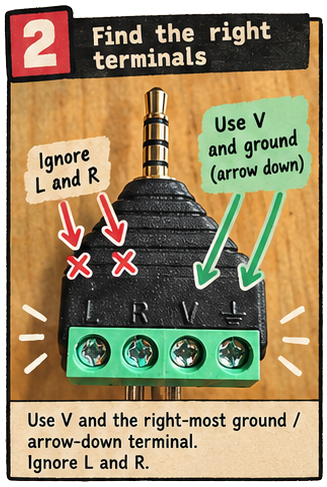
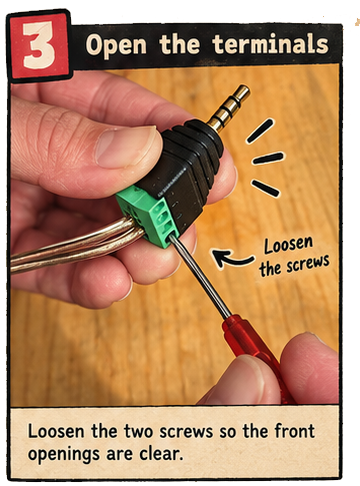
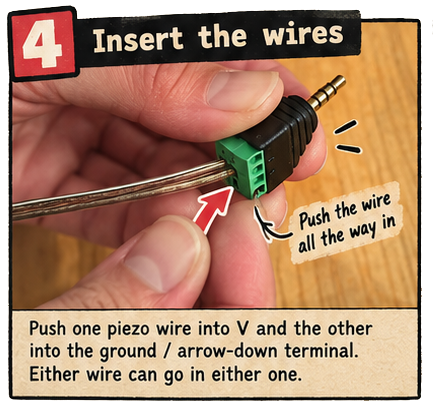
Find the V and ground / arrow-down terminals on the TRRS audio jack. Loosen those two screws, push one piezo wire into each opening, then tighten the screws. Either wire can go in either terminal.

  1. Leave the L and R terminals empty.
  2. Gently tug both wires to check they are secure.
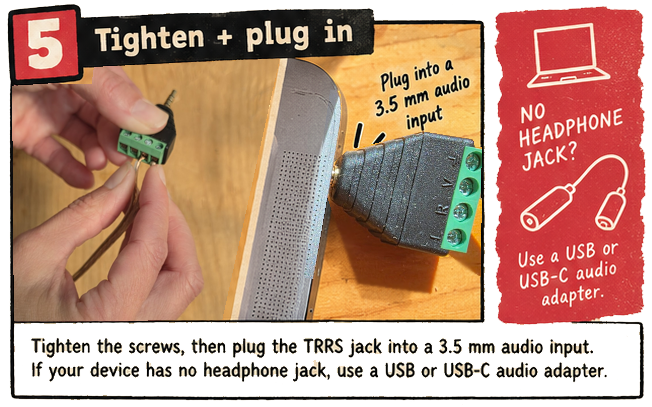
  3. Plug the jack into a 3.5 mm microphone/headset input—or use a USB audio adapter.
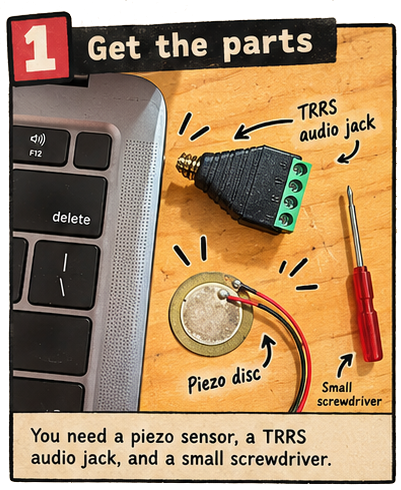
Step 1: Gather the piezo sensor, TRRS audio jack, and small screwdriver
Step 2: Find the V and right-most ground terminals on the TRRS audio jack
Step 3: Loosen the two terminal screws with the small screwdriver
Step 4: Insert one piezo wire into V and the other into the ground terminal
Step 5: Tighten the screws and plug the TRRS jack into a 3.5 millimetre audio input or USB audio adapter
02

Choose a test object

Attach it to something that vibrates.

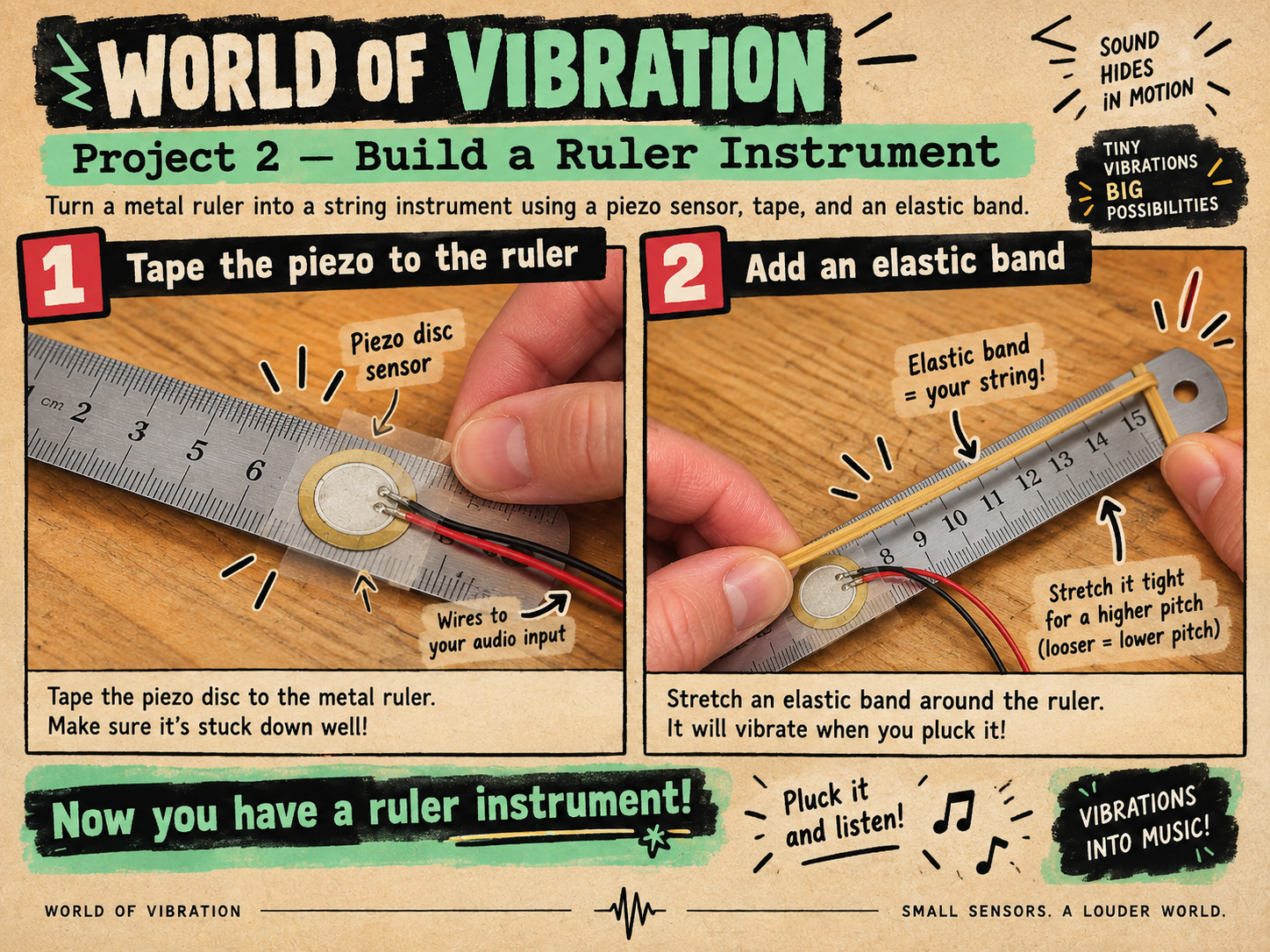
Tape the piezo firmly to a ruler, cardboard box, plastic cup, metal can, piece of wood, recycled container, or something strange from the materials pile. The sensor works best when its flat surface is touching the object.

RulerElastic bandsCardboardMetalPlasticWood
Illustrated guide showing how to tape the piezo sensor to a metal ruler and stretch an elastic band around it to make a ruler instrument
03

Wake up the signal

Tap, pluck, scrape, or bend.

Start gently and try one motion at a time. Open a lab app to see the vibration become a waveform, a sound, or a game control. Keep your computer and speaker volume low until the signal is working.

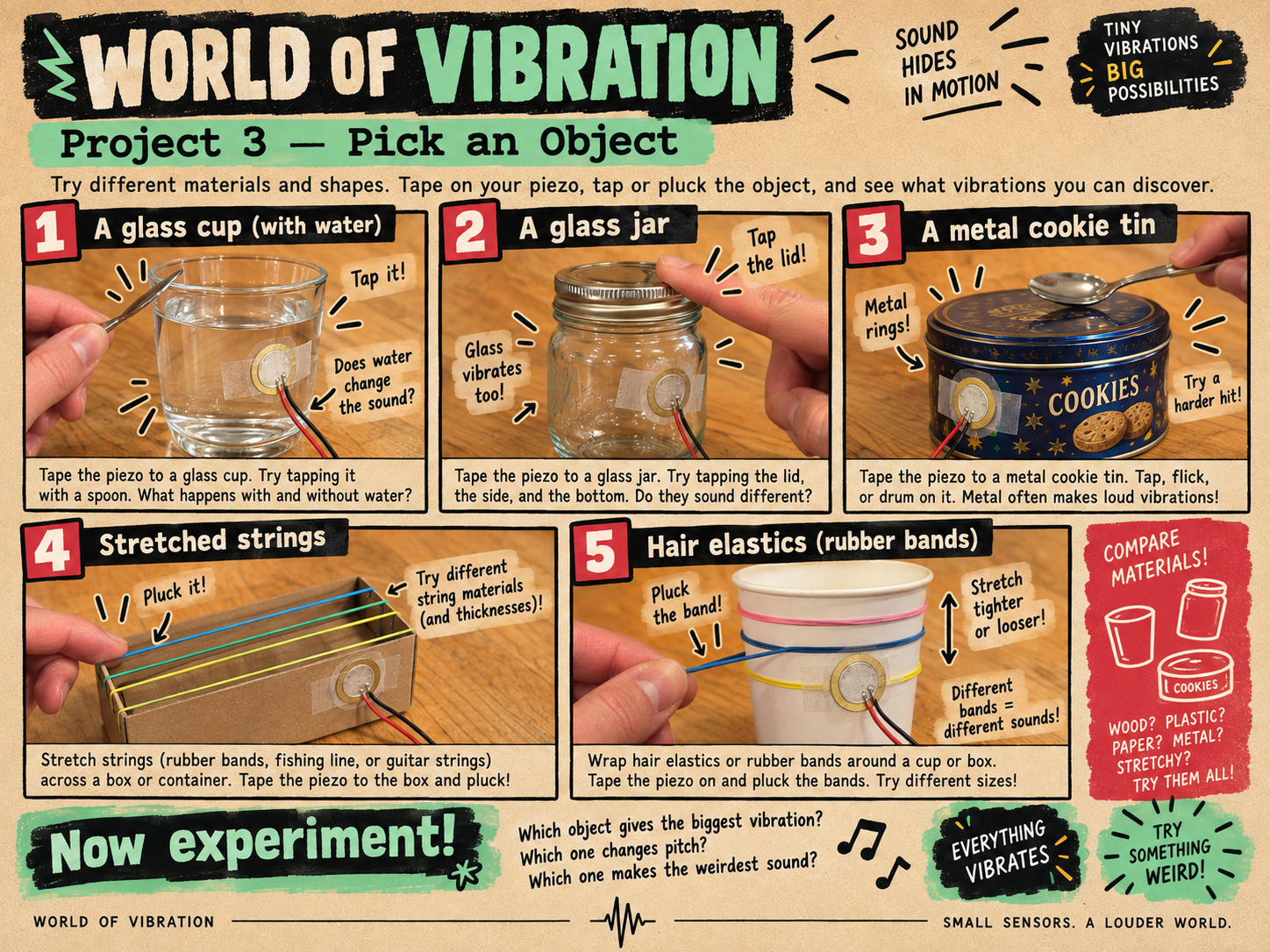
Illustrated vibration experiments using a glass of water, a glass jar, a metal tin, stretched strings, and elastic bands
04

Find the pattern

Change one thing. Compare what happens.

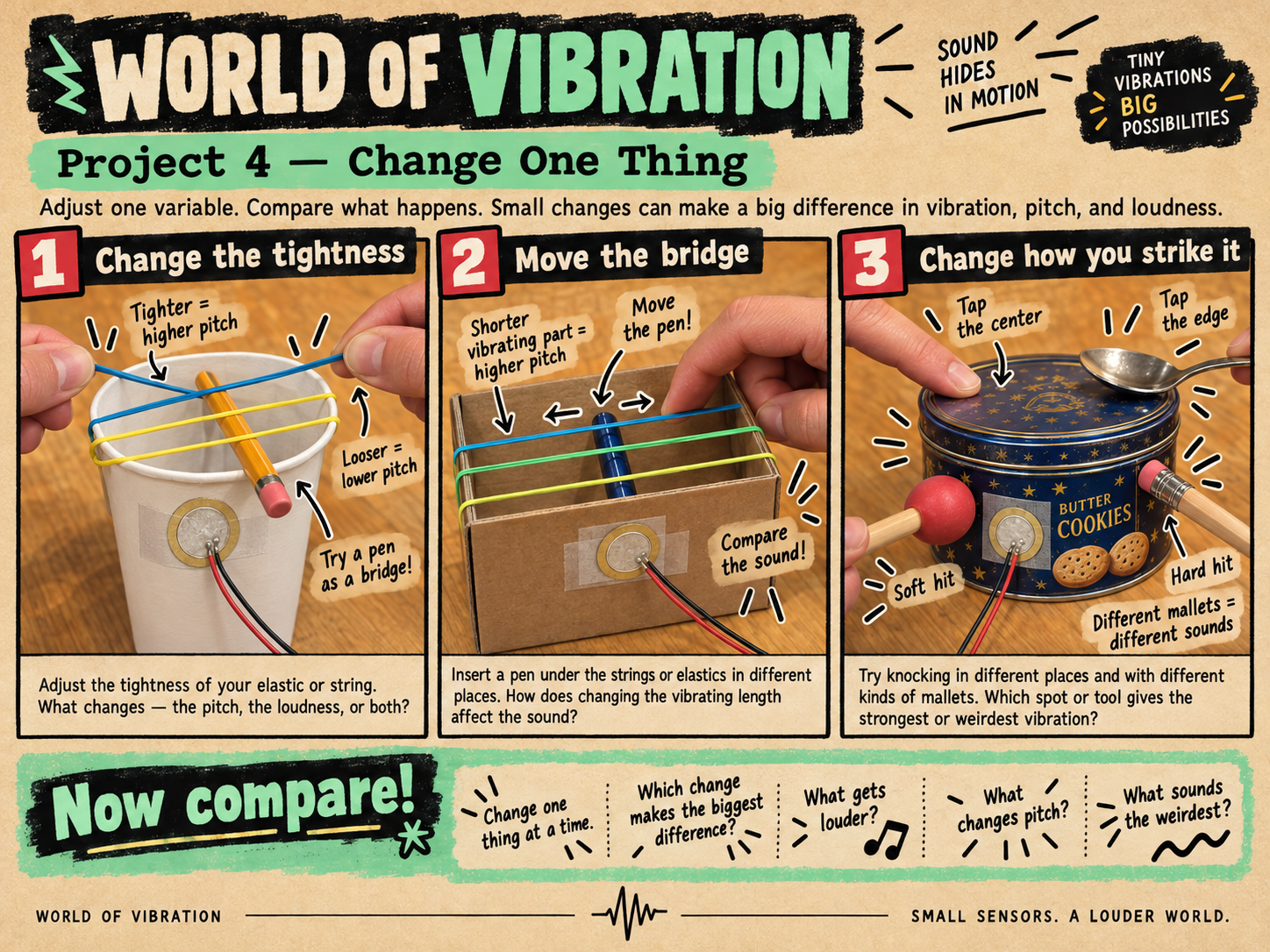
Move a ruler farther over the table edge and flick it again. Compare tight and loose elastic bands, or test the same tap on cardboard, wood, and metal. What changed in the sound, the waveform, or the strength of the signal?

Your clue: The difference between two tests tells you how vibration moves through each object.

Illustrated comparison experiments showing how changing string tightness, moving a bridge, and striking an object in different ways changes vibration, pitch, and loudness